ServicesReflective Window Film
Reflective Window Film in Conroe
Reflective window film carries a fine metalized coating that turns much of the sun's energy back outside, so less of it becomes heat in your rooms. Of all the films we install, it rejects the most heat. We check your glass, give you an honest yes or no, and schedule the install ahead of summer.
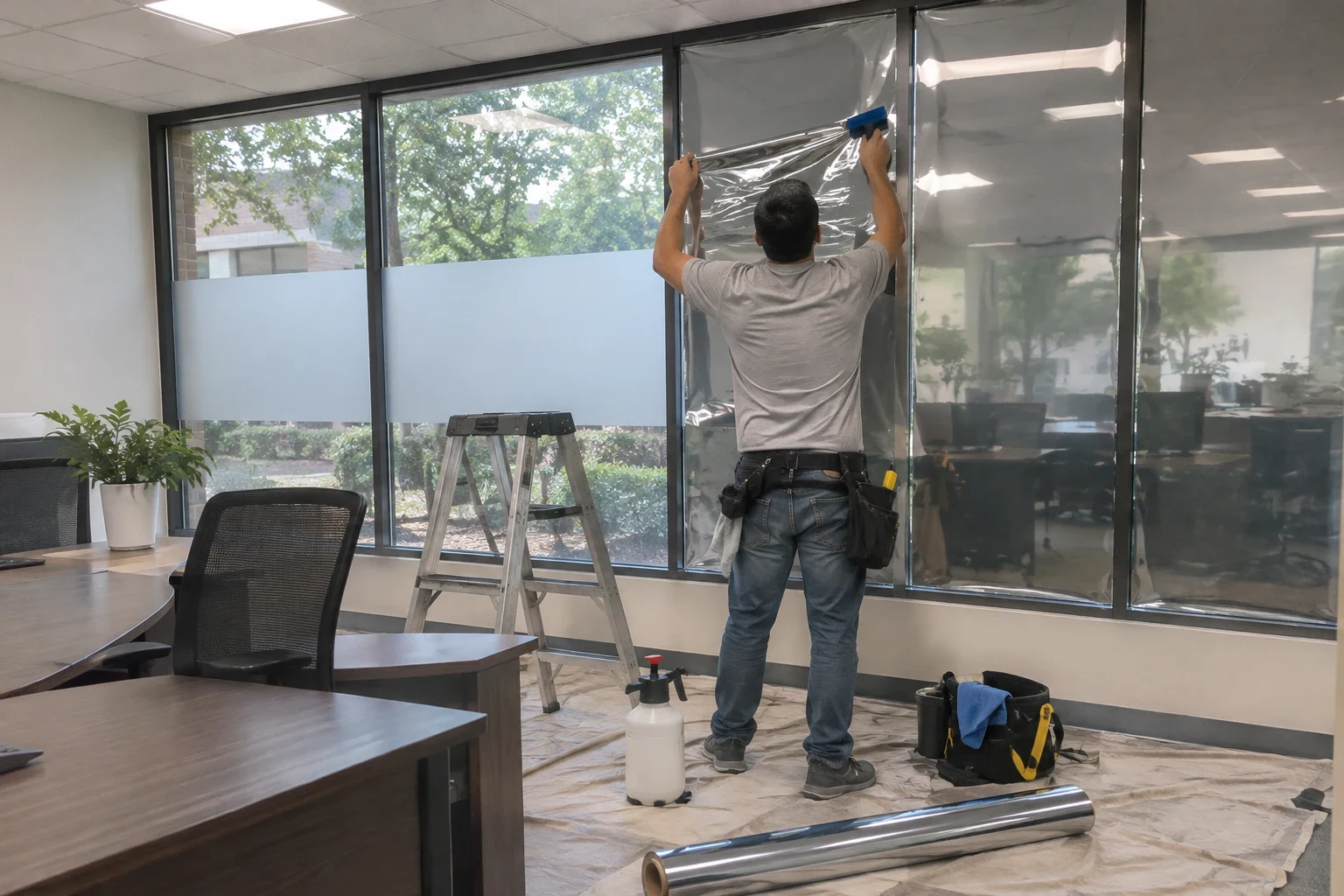
What Reflective Film Does and When It Makes Sense
Reflective window film is built around a metalized layer with its mirror side facing out. During the day it sends a large part of the sun's heat back outside, knocks down glare and stops most UV. People on the street see a silver or bronze sheen, not your living room.
Choose it for glass that faces strong afternoon sun, for rooms that never cool down, and for windows where you want daytime privacy. Skip it if a mirror finish bothers you, if your HOA restricts it, or if you want the clearest, most natural view. In those cases we steer people toward ceramic window film or non-reflective window film.
Plan the install for spring, ahead of a Conroe summer. Warm, dry weeks also help the film dry and set sooner, so it is working at full strength when the hottest days come.
What the Job Includes
- Checking your glass type
- Before we suggest a film, we find out if each pane is single, dual or low-E. Certain reflective films can stress some dual-pane units with heat, so the glass decides which film is safe.
- Samples on your windows
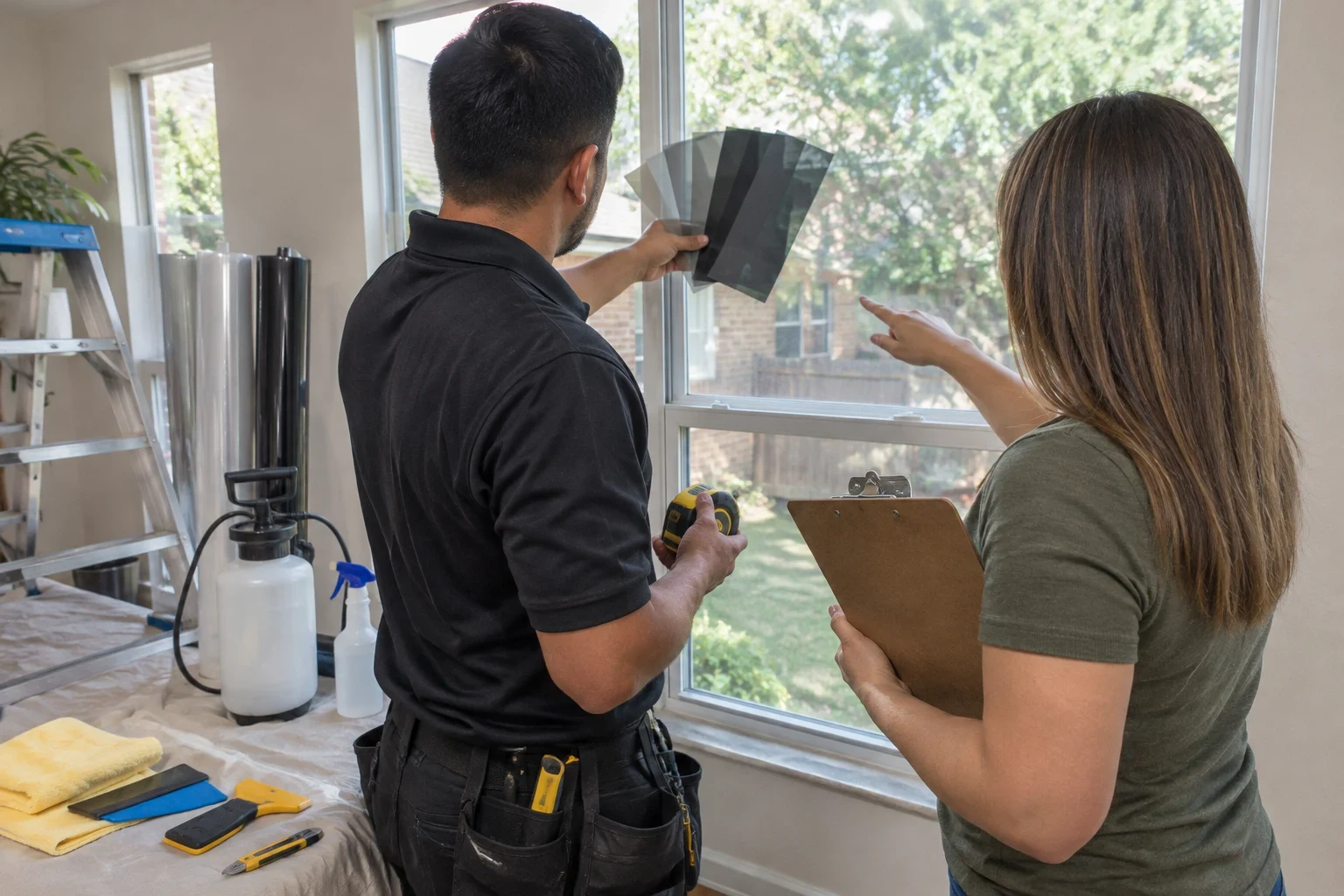
- We carry silver, bronze and dual-reflective samples. Dual-reflective keeps the outside mirror but looks less shiny from inside after dark. You see each one on your own glass before choosing.
- Thorough glass prep
- Every pane gets scraped and washed out to the edges. Anything left on the glass shows under the film for good, so we spend the most time here.
- Covering floors and sills
- Drop cloths go down before any water does. We move furniture with you as needed, and the install solution lands on cloth instead of carpet.
- Even edges that stay put
- We trim each sheet to sit a hair inside the frame with a consistent gap. That gap helps keep edges from peeling up later.
- Aftercare and a tidy finish
- We leave you simple curing and cleaning directions. Our installers are insured, and the room is picked up before we go.
Signs Reflective Film Is Worth a Look
One room is always hot
When a bedroom or den on the west side holds heat well into the evening, the afternoon sun coming through its glass is usually why.
The AC runs all afternoon
An air conditioner that can't keep up from midafternoon into early evening is often fighting heat from the windows.
Glare on screens and floors
Washed-out TV and computer screens, or bright hot spots across the floor, mean direct sun is pouring in.
Fading furniture and floors
Rugs, cushions and wood that have lost color near the glass are a sign UV is getting through.
You want daytime privacy without blinds
With reflective film you can leave blinds up in daylight, and people outside mostly see their own reflection.
What Moves the Price
Your price comes from the glass you have and the film you pick. We write it up window by window, so every line on the estimate makes sense to you. These are the things that push it up or down.
How much glass you cover
Film is sold and installed by the square foot. Doing two or three problem windows runs well under a full house, and many people start there.
Which reflective film
Plain silver is the budget pick. Dual-reflective and higher-clarity films cost more because they look softer from inside and hold a clearer view.
Height and pane layout
Second-story and tall windows need extra ladders or staging. Windows split into many small panes mean more cuts and more trim time than one large sheet.
Removing an older tint
Worn tint that has turned purple or started to blister has to come off before new film goes on. Glue that years of sun have cooked onto the glass can take real time to scrape clean.
Business glass
Storefronts and office windows are quoted on scope, size and access. Commercial window tinting comes with a 15-year warranty.
How Install Day Goes
- 1
Phone call, then a home visit
Start with a free quote by phone and point out the windows giving you trouble. On the visit we measure, confirm the glass type and hold samples up to your windows.
- 2
Cover and clean
Floors and sills get covered, blinds or anything in the way comes down, and each pane is cleaned until no dust or film residue remains.
- 3
Set the film
We apply the film wet so it can slide into place, squeegee the water out, then trim the edges. A typical house takes from a few hours up to a day.
- 4
Final check and pickup
We go window by window with you, clear out our cloths and scraps, and explain curing. Light haze or small water pockets can linger a few weeks and fade as the film dries.
Reflective Window Film Questions
Can people see in at night?
Yes, when it is dark out and your lights are on. The mirror side always faces whichever side is brighter. Keep blinds for evenings, or ask about privacy window tinting for rooms where night privacy matters.
Will it make my rooms dark?
Your view gets somewhat darker, and how much depends on the film. Some lighter reflective options still block plenty of heat. We tape samples to your windows so you can judge them in your own daylight before deciding.
Is it safe on dual-pane windows?
Most dual-pane glass handles it well, but certain films can load the glass with too much heat. We identify your glass type first. If a film is risky for it, we tell you and suggest one that is not.
Does it affect cell signal?
The metal in reflective film can cut phone reception a bit in some rooms. If your signal inside is already spotty, let us know. Ceramic window film has no metal and avoids the issue.
When should I get it installed?
Spring works best. The film is up before the worst heat arrives, and warmer days help it dry out and settle sooner.
How do I clean it?
Give it about 30 days before you clean it. After that, a soft cloth and a mild cleaner without ammonia is all it needs. Keep razor blades and scrub pads away from the film.
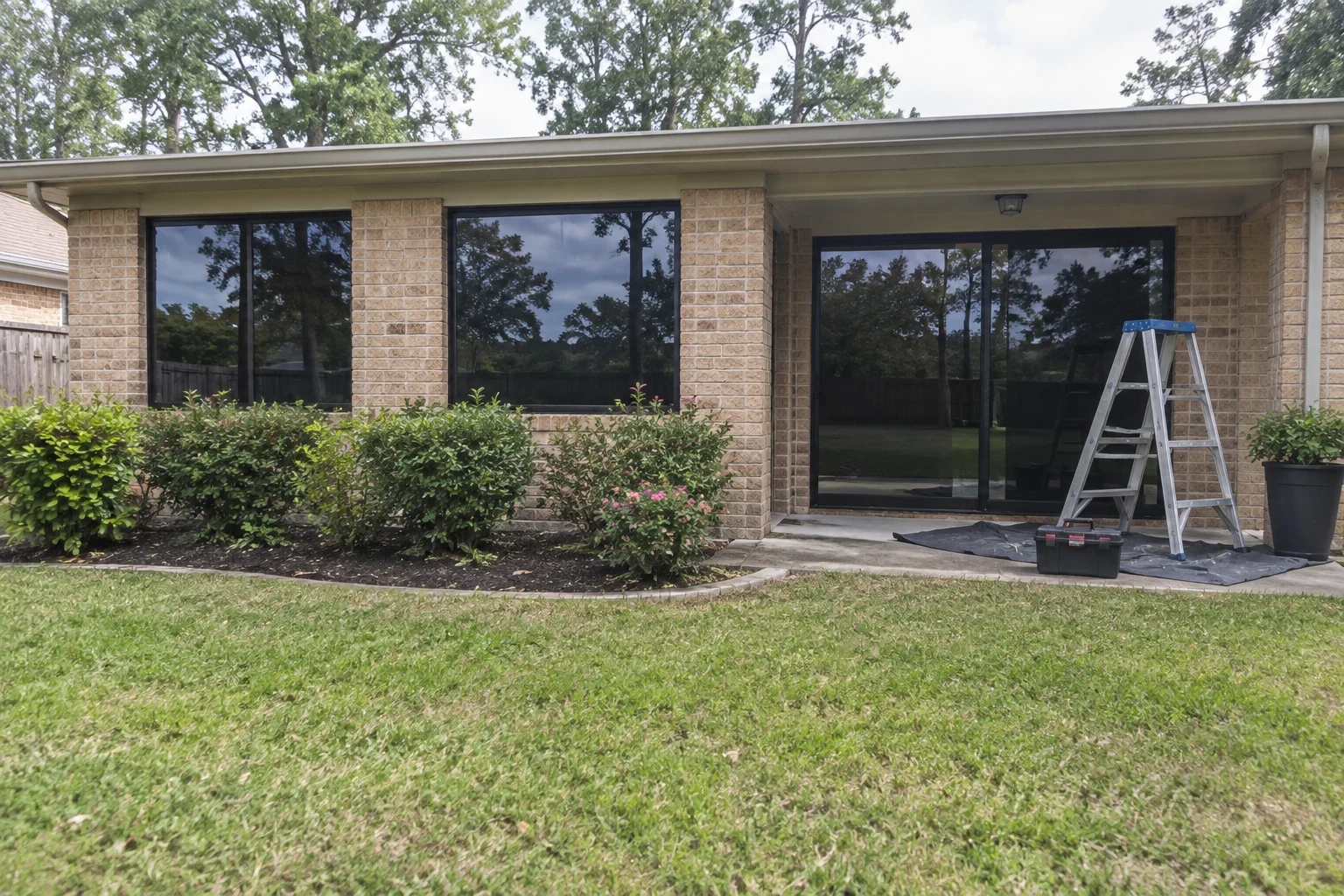
Beat the Heat Before Summer
Tell us which windows run hot and we will tell you if reflective film is the right fit. We serve Conroe and nearby towns like Willis, Montgomery and The Woodlands.