How Do Window Films Work on Home Windows in Conroe?
A plain look at what that thin sheet on your glass is doing, and why one film suits a bedroom while another suits a west-facing living room.
How do window films work?
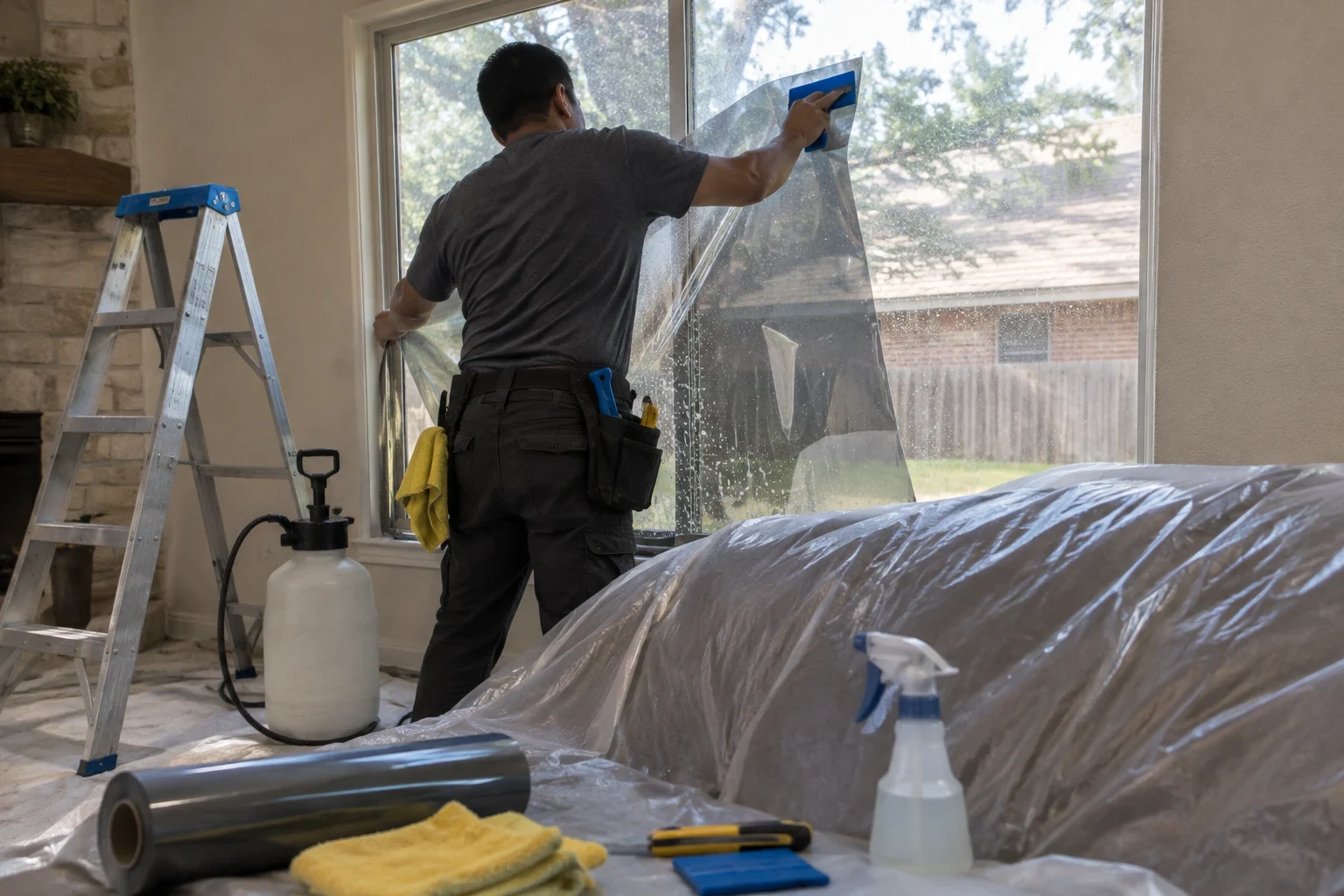
Window film is a thin polyester layer applied to the inside of your glass. It works by absorbing, reflecting or filtering parts of sunlight: infrared that carries heat, ultraviolet that fades floors and furniture, and visible light that causes glare. Each film handles those parts differently, so the right one depends on the room and what bothers you.
Is window film the same as tint?
Mostly, yes. People say tint, installers say window film, and it is the same product: layers of clear polyester bonded together, with a scratch-resistant coat on the room side and an adhesive on the glass side. Tinted glass is different. That color is built into the glass at the factory and you cannot change it without replacing the window.
What sets one film apart from another is what goes into those layers. Some use dye to darken the view. Some use a fine metal coating to bounce light back out. Ceramic film uses tiny nonmetal particles that target heat without making the room dark. Frosted and decorative films scatter light so you get daylight but no clear view in.
Do window films block heat?
Good ones do, and the way they do it matters. A big share of the heat in sunlight is infrared, which you feel but cannot see. Ceramic film and metalized film are built to stop a lot of that infrared before it reaches your couch, your floor or you. Plain dyed film mostly soaks up visible light, so the room looks darker but the glass itself can still get warm.
Almost every quality film also blocks nearly all UV. That is the part that bleaches hardwood, rugs and the fabric on the chair by the window. Cutting UV does not make a room cooler on its own, but it slows the fading you notice a few summers in.
In a Conroe summer, the rooms that suffer are usually the ones facing west and south. Filming just those windows often makes the biggest difference in how hard the air conditioner runs in the late afternoon.
- Infrared: the heat you feel through the glass. Ceramic and metalized films handle this best.
- Ultraviolet: the fading and sun damage. Most films block nearly all of it.
- Visible light: the brightness and glare. How dark a film is controls this part.
How do reflective films work, and can you see through them at night?
Reflective film has a thin metal layer that acts like a one-way mirror. In daytime the outside is much brighter than your living room, so people outside see their own reflection and you see out just fine. That makes it a solid daytime privacy option and a strong heat blocker.
The catch is that it only works one way when the outside is brighter. At night, with your lamps on and the yard dark, the effect flips. Neighbors can see in, and you see your own reflection from inside. This is the question we answer most on privacy jobs, and it surprises a lot of people.
For real nighttime privacy you need a film that blocks the view no matter where the light is. Frosted, etched-look and other decorative films blur everything while still letting daylight through, which is why they work well on bathroom windows, front door sidelights and street-facing bedrooms. Some homeowners pair a reflective film on the big windows with curtains for evenings.
What are the downsides and common mistakes with window film?
Film is not right for every window, and a few mistakes cause most of the problems we see. Most of them come from picking a film by how it looks on a sample card instead of how the room is used.
- Choosing film that is too dark. A dim room in January is a common regret, so we hold samples up to your own windows.
- Expecting mirror film to give privacy at night. It does not, as covered above.
- Putting the wrong film on certain double-pane or older glass. Some films absorb enough heat to stress the glass, so the glass type and the window maker's guidance need checking first.
- Rushing the cure. Small water pockets and haze are normal for a few weeks and fade as the film dries. Pressing on them or cleaning too soon can leave marks.
- Cleaning with ammonia or rough pads, which can cloud or scratch the coating.
- Skipping prep on dirty or old glass. Dust and paint specks trapped under film show forever.
When is the best time to put film on your windows?
Late winter and spring are the easy times. You get the film on and cured before the long stretch of hot, humid months, so the cooler rooms show up right when you want them. Film cures faster in warm weather, but installing ahead of peak heat means you are not living through a hot June waiting on an appointment.
Fall is a good second window. The sun sits lower in the sky through winter and pushes glare deep into living rooms and home offices, so a glare-reduction or privacy film earns its keep then too. Whatever the season, we look at which way each window faces and what the room is for before suggesting a film.
More questions about window film
- Does window film go on the inside or outside of the glass?
- For homes, we install it on the inside of the glass. That keeps it out of the weather and makes it last longer.
- Will window film make my rooms too dark?
- Not if you pick the right one. Ceramic and light non-reflective films block a lot of heat while staying close to clear, so the room still looks natural.
- How do I clean windows after film goes on?
- Wait until the film has fully cured, then use a soft cloth or rubber squeegee with mild soapy water. Skip ammonia cleaners and anything abrasive.
- Can film be taken off later?
- Yes. It can be removed with heat and some careful scraping, and the glass is cleaned back to bare. It is a job best done slowly so adhesive does not stay behind.
Get the right film on before the heat arrives
Tell us which rooms run hot, which get glare and where you want privacy. We will talk through the films that fit those windows and give you a free quote over the phone.