ServicesHome Window Tinting
Home Window Tinting in Conroe
We put window film on the glass inside your home so hot rooms cool down, glare drops and floors stop fading. We look at each window, tell you which film fits, and install it in a day. Most people book in spring so the film is ready before summer.
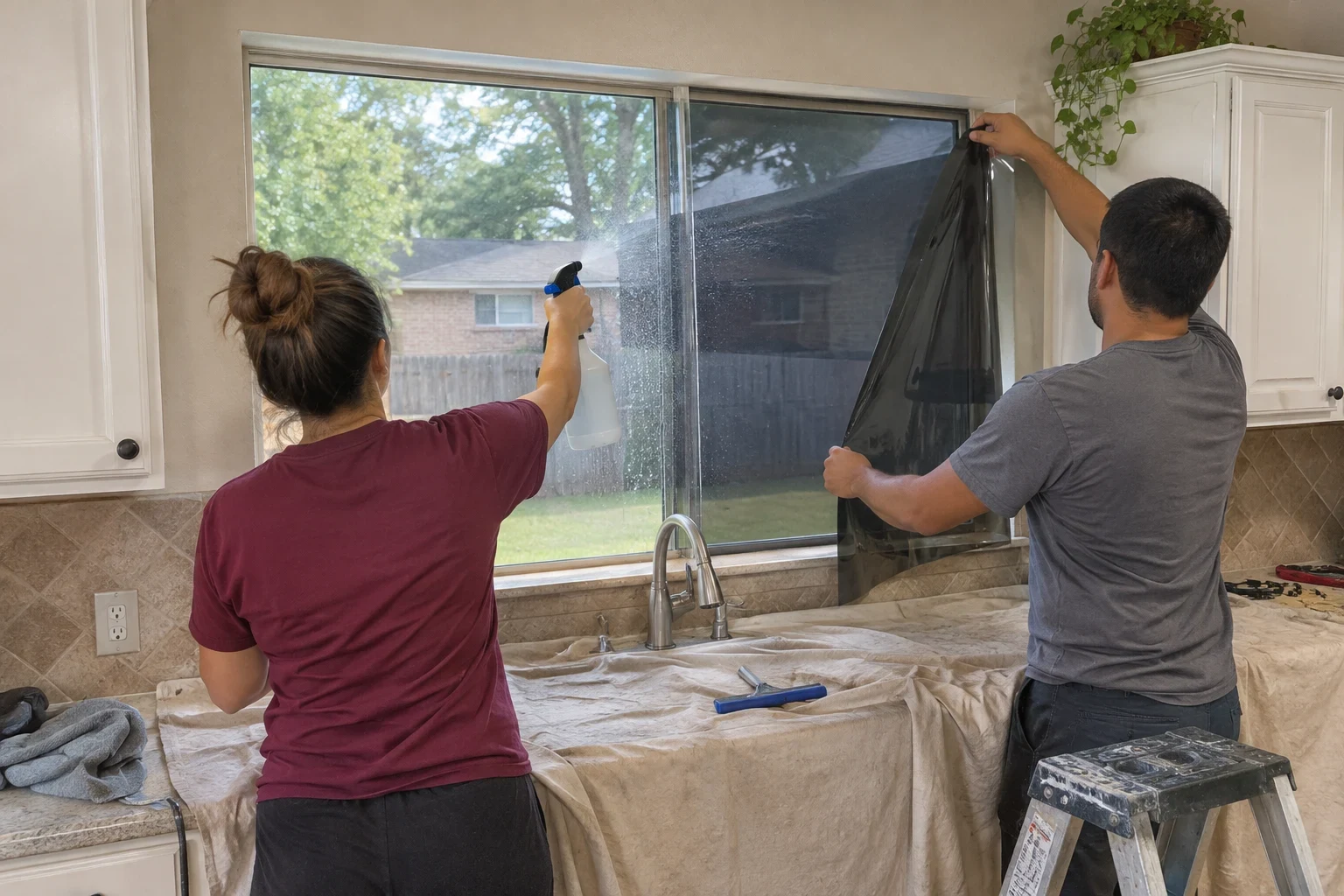
What Home Window Tinting Does for Your House
We stick a thin sheet of film to the room side of each pane. The right film turns away a big share of the sun's heat and blocks almost all UV, and the view out stays clear. The AC gets a break, the chair by the window keeps its color and the afternoon TV glare goes away.
It makes sense when a room or two always runs hotter than the rest of the house, when west or south windows take the full sun, or when the blinds stay closed all day just to keep cool. Film will not fix a drafty frame or a fogged seal, and if that is the real issue, we will say so.
Timing helps. Film dries out fastest in warm, dry weather, and Conroe heat shows up early in the year. A spring or early fall install means the film is doing its job when the hot months arrive.
What Your Install Includes
- We study each window
- For every window we record which way it faces, its glass type and how much sun it gets. Single-pane and dual-pane glass call for different films, so we pair them to match.
- Honest film comparisons
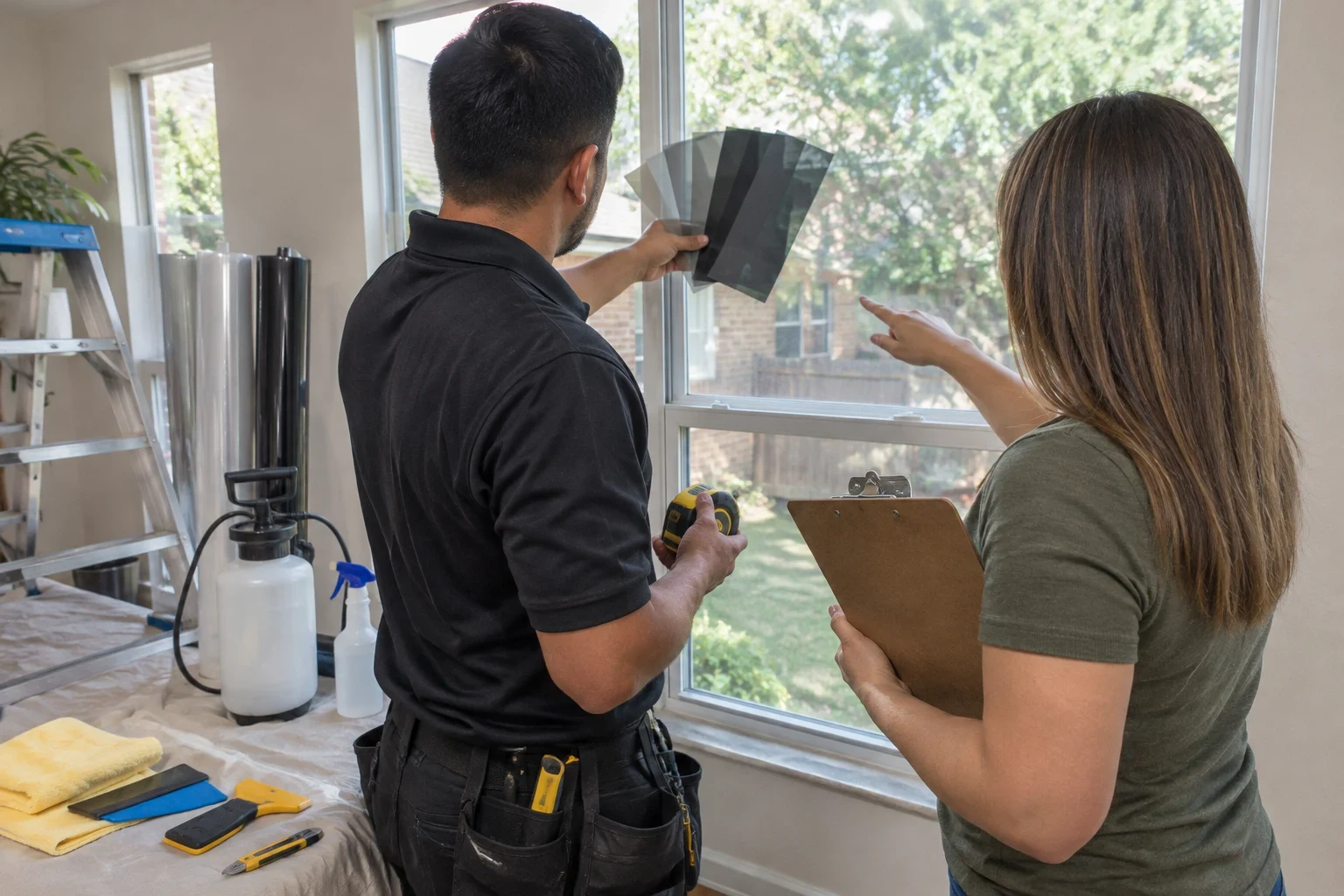
- Samples go up in your own daylight. Ceramic, reflective and non-reflective film each trade one thing for another, and we explain what each choice gets you and what it costs you.
- Careful glass cleaning
- We wash and scrape each pane so no dust or old residue gets locked under the film. How well this goes decides how the finished window looks.
- Floors and furniture covered
- We lay drop cloths, move what's in our way and put it back afterward. Our installers are insured, so you're covered while we're working in your house.
- Tidy finish and care notes
- Trimmings get bagged and sills wiped. We also leave a short care sheet saying when the filmed side can be washed and which cleaners to avoid.
Signs Your Windows Need Film
One room runs hot
If one bedroom feels like an oven late in the day while the rest of the house is fine, sun coming through that glass is the likely cause.
Faded floors and furniture
UV light bleaches wood, rugs and fabric over time. A lighter patch where the sun lands is the sign, and film keeps it from spreading.
Glare on screens
If you move the couch or pull the blinds just to see the TV or a laptop, glare reduction film handles that and leaves the view open.
Big summer power bills
An AC that runs all afternoon is often fighting heat from the windows. Film cuts that heat at the glass, which helps with energy savings.
Blinds closed all day
Staying cool should not mean living in the dark. Film lets daylight through and keeps much of the heat out.
What Moves the Price
No two houses have the same glass, so we price window by window instead of guessing. A handful of things drive the number up or down. Each one shows up on your written estimate before we start.
How much glass you have
More square feet of glass takes more film and more hours. A big picture window or a sliding patio door runs higher than a small bedroom pane.
Which film you pick
Ceramic film costs more than basic dyed or reflective film, but it rejects heat well and keeps a clear, non-mirror look. We will say plainly which rooms need it and which can do fine with less.
Ladder work and tricky spots
Upstairs windows, the glass above an entry door and panes tucked behind shelving need ladders and more time to reach and fit.
Stripping old tint
Peeling or bubbled film from years ago has to be pulled off and the leftover glue scraped away before new film can go on.
From First Call to Finished Glass
- 1
Give us a call
Tell us which rooms bother you and about how many windows there are. We book a visit and prepare your free quote.
- 2
Measuring and film choice
During the visit we measure every pane, check the glass and hold samples to your windows. The written estimate names each window and the film it will get.
- 3
The install
One day covers most homes. We clean the glass, float the film on a wet slip solution and squeegee it flat out to the edges.
- 4
While the film cures
For several days, and now and then a few weeks, the film may look slightly hazy or hold small water pockets. The moisture clears on its own, and faster in warm weather.
Home Window Tinting Questions
Will film make my rooms darker?
Only if you choose a dark look. Lots of films are close to clear yet still stop a fair amount of heat and nearly all UV. We press samples to your own windows so you can judge each shade in your light before choosing.
Is film okay on dual-pane windows?
Yes, if it's the right film. Certain films take on more heat than some dual-pane units can handle, so we confirm your glass and pick a film rated for it. That's a main reason we look at every window in person before quoting.
What's the best time to book?
Spring and early fall. It's warm enough for the film to dry quickly, and it's working before the hottest weeks. We also install in summer and winter; cool, damp days just slow the drying a little.
Can I still open and wash my windows?
Yes. Give it about 30 days before washing the filmed side. After that, a microfiber cloth and an ammonia-free cleaner are all you need. Opening and closing the window won't harm the film.
Do you tint homes outside Conroe?
We do. Along with Conroe, we work in nearby towns like Willis, Montgomery, Magnolia and The Woodlands. Give us your address on the call and we'll confirm we cover it.
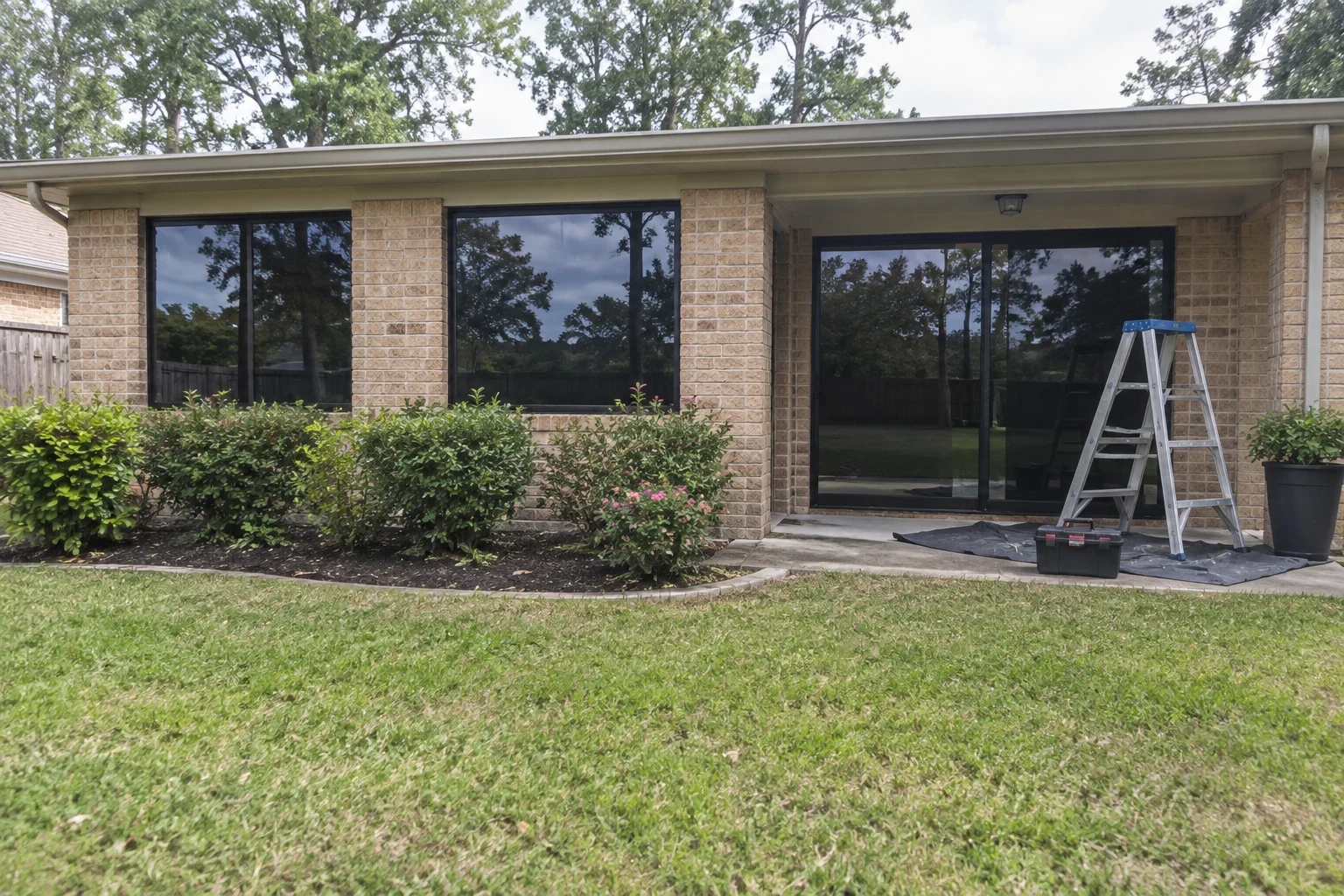
Get Your Windows Ready Before the Heat
Tell us which rooms run hot and we will come take a look. You get a clear, written estimate and a film that fits your glass.