ServicesNon-Reflective Window Film
Non-Reflective Window Film in Conroe
This film takes the heat, glare and UV out of your rooms while your windows keep their ordinary look, with no mirror shine from the yard or the couch. We try to get it on before the hot months arrive, so the house is ready when summer does.
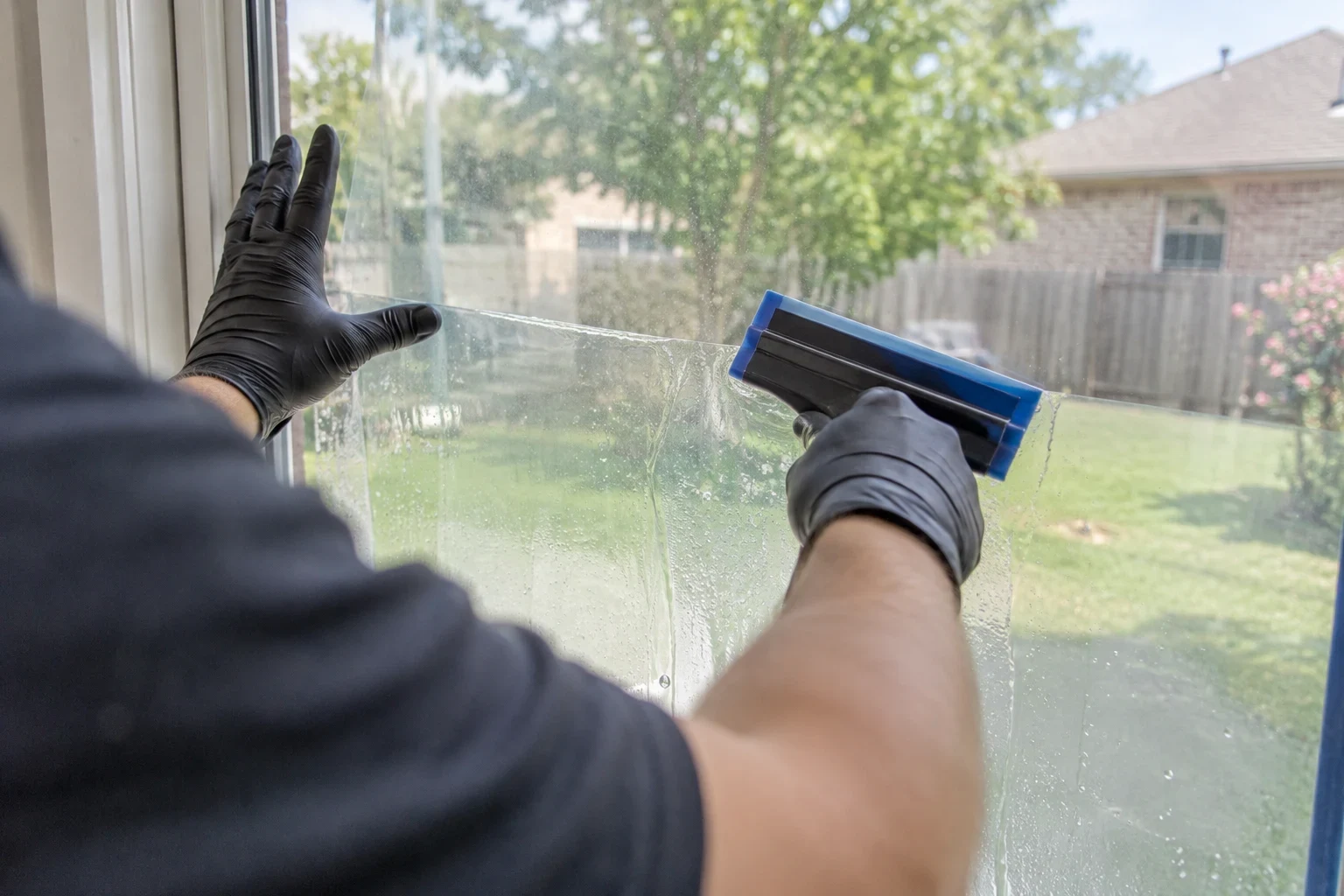
Cooler rooms, glass that still looks like glass
Most people who ask for this film like their view and the look of their house. They just want the west room to stop baking every afternoon and the glare off the TV to go away. Non-reflective film does that with a low-shine layer, often ceramic, that absorbs and blocks heat and UV instead of bouncing light back like a mirror.
It is also the right pick if you hate the nighttime mirror effect. With mirrored film, when your lights are on after dark, you mostly see yourself in the glass. Non-reflective film stays clear, so you can still see out to the yard at night. If your neighborhood rules limit mirrored finishes, this is the film that usually fits.
Timing helps. Getting film up in spring, before Conroe's long run of hot, humid days, means you feel the difference from the first bad week. And if a wall takes such a beating that you need every bit of heat rejection, we will tell you straight when reflective window film is the better call.
What the job includes
- A glass check before we quote
- We look at every window first: single-pane, dual-pane, low-E or tempered. Some films put extra heat stress on certain dual-pane units. We match the film to the glass so it does its job without causing problems.
- Samples on your own windows
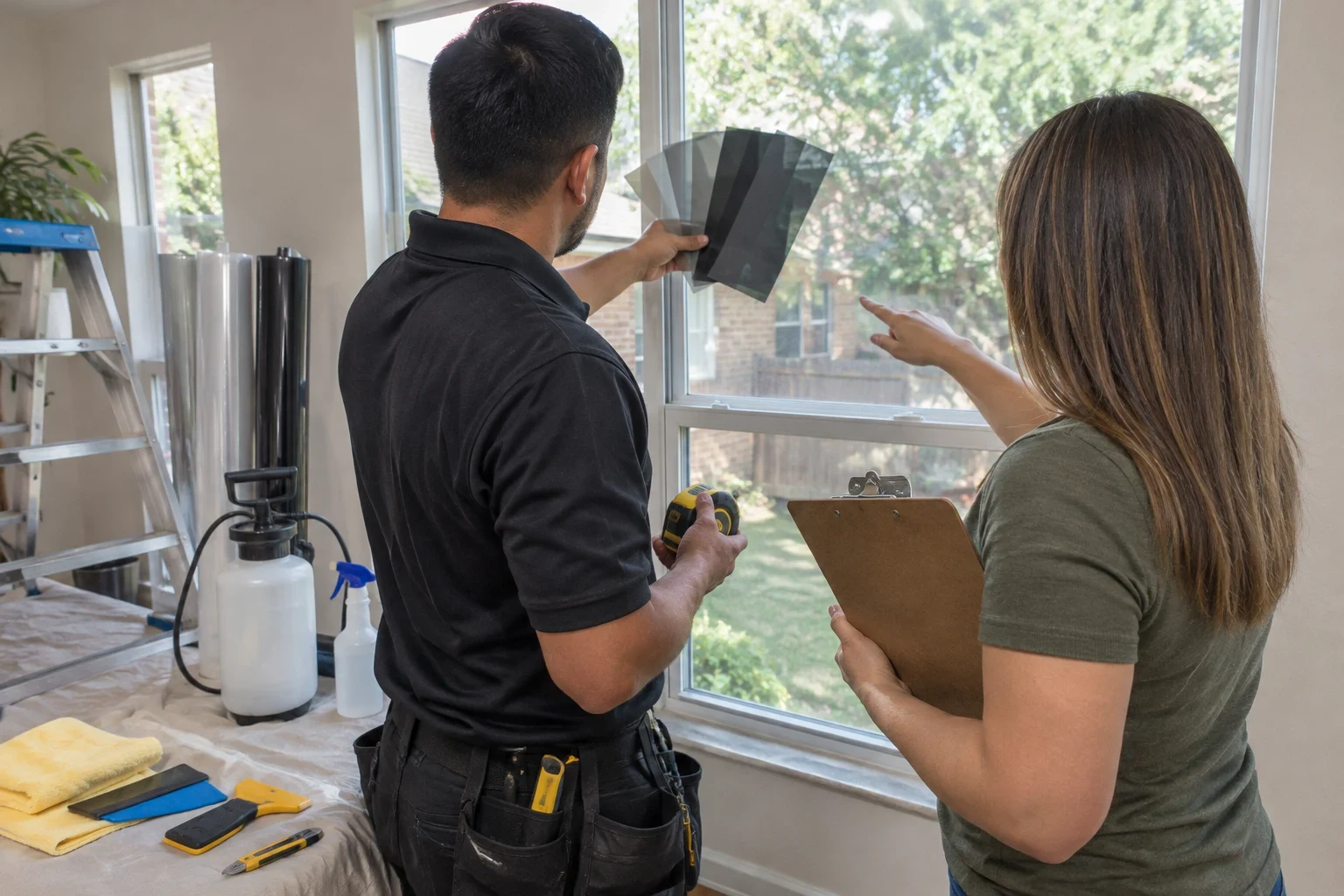
- We hold real film samples up to your glass so you see the shade and clarity in your light. Lighter and darker options are both on the table, including ceramic film.
- Careful prep
- We clean each pane, scrape the edges and pull out grit from the corners. A clean surface is what keeps specks and bubbles out from under the film.
- Tight, even edges
- Film gets trimmed to a thin, even gap at the frame. That small gap keeps edges from lifting over time.
- Protection and cleanup
- Drop cloths go down on sills and floors, and we move what needs moving. When we leave, the glass is wiped and the room is put back.
- Covered crew in your home
- Our installers are insured. That counts when someone is up a ladder and working around your furniture and floors.
Signs non-reflective film is the right fit
One room runs hot
A bedroom or living room that stays warmer than the rest of the house, usually on the west or south side, is the classic case.
Glare at the same time every day
If you close the blinds at 4 p.m. just to see the TV or your laptop, film can cut that glare and let you keep the blinds open.
Fading floors and furniture
Sun-bleached rugs, wood floors or couch cushions near the window point to UV. Window film blocks most of it.
You passed on mirrored tint
Maybe you didn't like the shiny look, or your HOA wouldn't allow it. Non-reflective film gives you the heat and glare control without the mirror finish.
You want your night view back
If you like seeing the porch or backyard after dark, a low-reflectance film keeps that view.
The AC never seems to rest
When the unit runs nonstop on summer afternoons, cutting the heat coming through the glass can bring real energy savings.
How the work goes
- 1
Start with a free quote
Let us know which rooms are a problem, which direction the windows face and what you'd like fixed. We book a time to see them.
- 2
Visit and samples
We measure every opening, record the glass type and press film samples to your panes. Then you get a written quote listing each window and the film planned for it.
- 3
The install
We cover the room, clean the glass and apply the film over a slip solution so it can be positioned exactly. The water gets squeegeed out and the edges trimmed. At the visit we'll tell you how long your job should run.
- 4
Drying and a follow-up
Early on, the film may look a little cloudy or hold small moisture pockets. They clear as the water behind it dries, and more slowly in humid weather. Wait a few weeks before cleaning the glass, and call us if anything still looks off after that.
What moves the price
We price each job after we've looked at your windows, since no two houses have the same glass. The amount of glass and the film you choose matter most. You'll have the number in writing before we start.
- Amount of glass
- Total square footage and the number of panes set most of the price. Large, plain panes usually go faster per foot than a lot of small divided ones.
- Film type
- Ceramic film runs higher than basic dyed or carbon films. In return you get stronger heat rejection with very little shine.
- Reach and access
- Tall windows, transoms over doors and panes tucked behind built-ins call for ladders and extra time.
- Old film removal
- Peeling or bubbled tint from a past install must be stripped first. Then the leftover glue gets scrubbed off so the new film has clean glass to grip.
- Odd shapes
- Arched, round or cut-up windows take more trimming and use more film than plain rectangles.
Questions about non-reflective film
Something not covered here? (936) 261-7982
Does this film darken the room?
That depends on the shade you pick. Some non-reflective films look almost clear and still stop a good share of heat and most UV. Deeper shades knock down more glare. We hold both up to your glass so you can decide.
Does it block as much heat as reflective film?
Mirrored film usually rejects the most heat for the money. A good ceramic non-reflective film comes close without the shine. For most rooms that trade is worth it, and we will be honest if a wall needs the stronger option.
Can I still see out at night?
Yes. That is a big reason people choose it. The film has low reflectance, so the glass doesn't turn into a mirror on the inside when your lights are on after dark.
Is it safe on dual-pane windows?
Usually, yes, when the film fits the glass you have. Certain films soak up enough heat to stress some insulated units. We check your windows first and only suggest a film that works with them.
Can you put it on my business?
Yes. Storefronts and offices often want glare control without a mirrored look that hides the inside. Non-reflective film on a business falls under our commercial window tinting, which comes with a 15-year warranty.
When is the best time to install?
Spring is ideal, since the film is on and cured before the hottest stretch of the year. We still install year-round, and fall works well for glare when the sun sits lower.
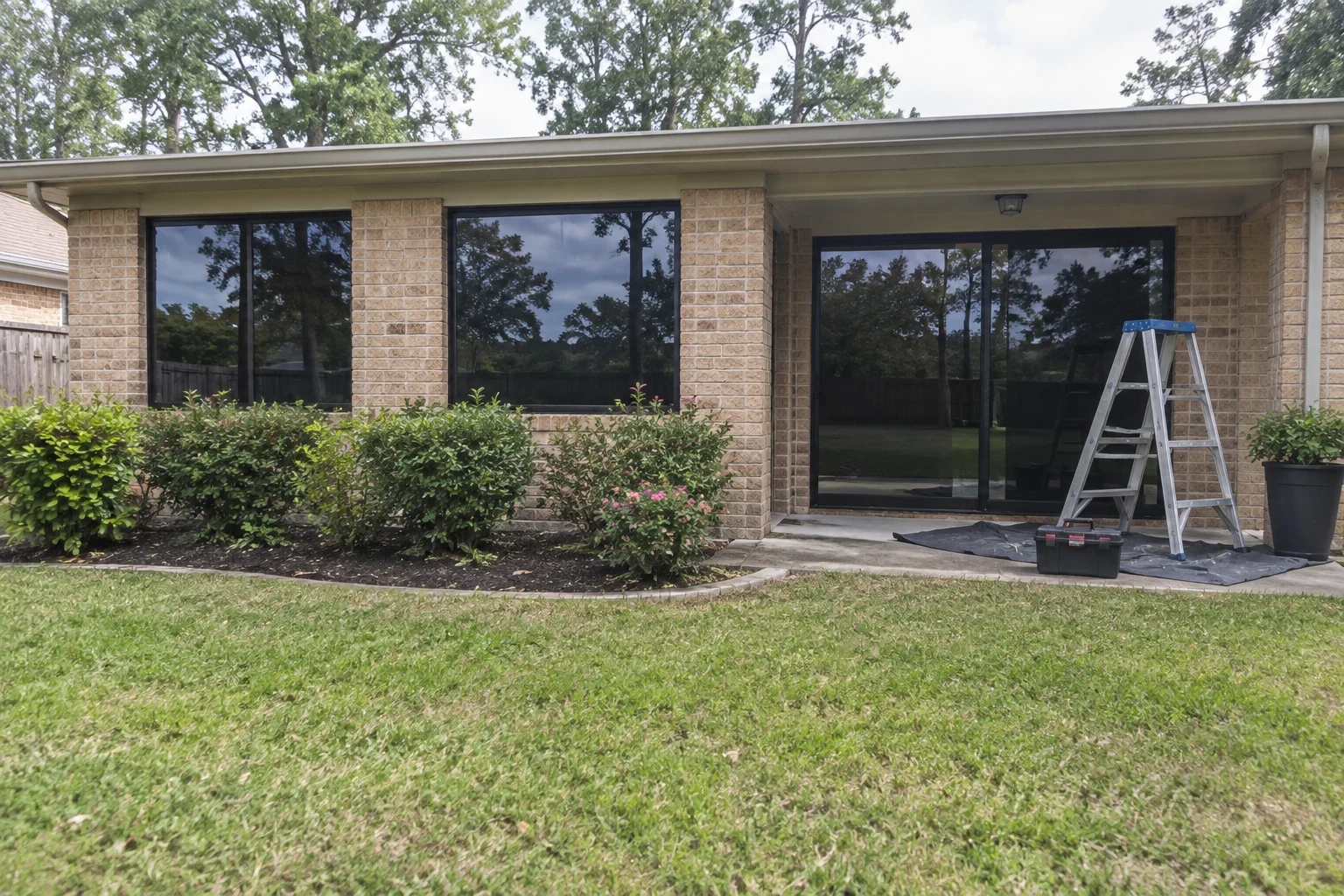
Get the film up before the heat does
Tell us which rooms run hot or glare up, and we will come look and talk you through your options. Your quote costs nothing.